Digital AI Transformation: Benefits, Strategies, and Future Trends
Digital AI transformation is the next stage of organisational transformation, combining traditional digital technologies with artificial intelligence to change how businesses operate, make decisions, serve customers, and create value.
While earlier digital transformation focused on moving processes, information, and services online, AI transformation goes further. It enables organisations to use data and intelligent systems to automate tasks, identify patterns, generate content, support employees, and make faster, more informed decisions.
What Is Digital AI Transformation?
Digital AI transformation is the integration of artificial intelligence into an organisation's technology, processes, workforce, and business strategy.
It can include technologies such as:
- Generative AI and large language models
- Machine learning and predictive analytics
- Intelligent automation
- Computer vision
- Natural-language processing
- AI-powered customer-service systems
- Recommendation and personalisation engines
- AI-assisted software development
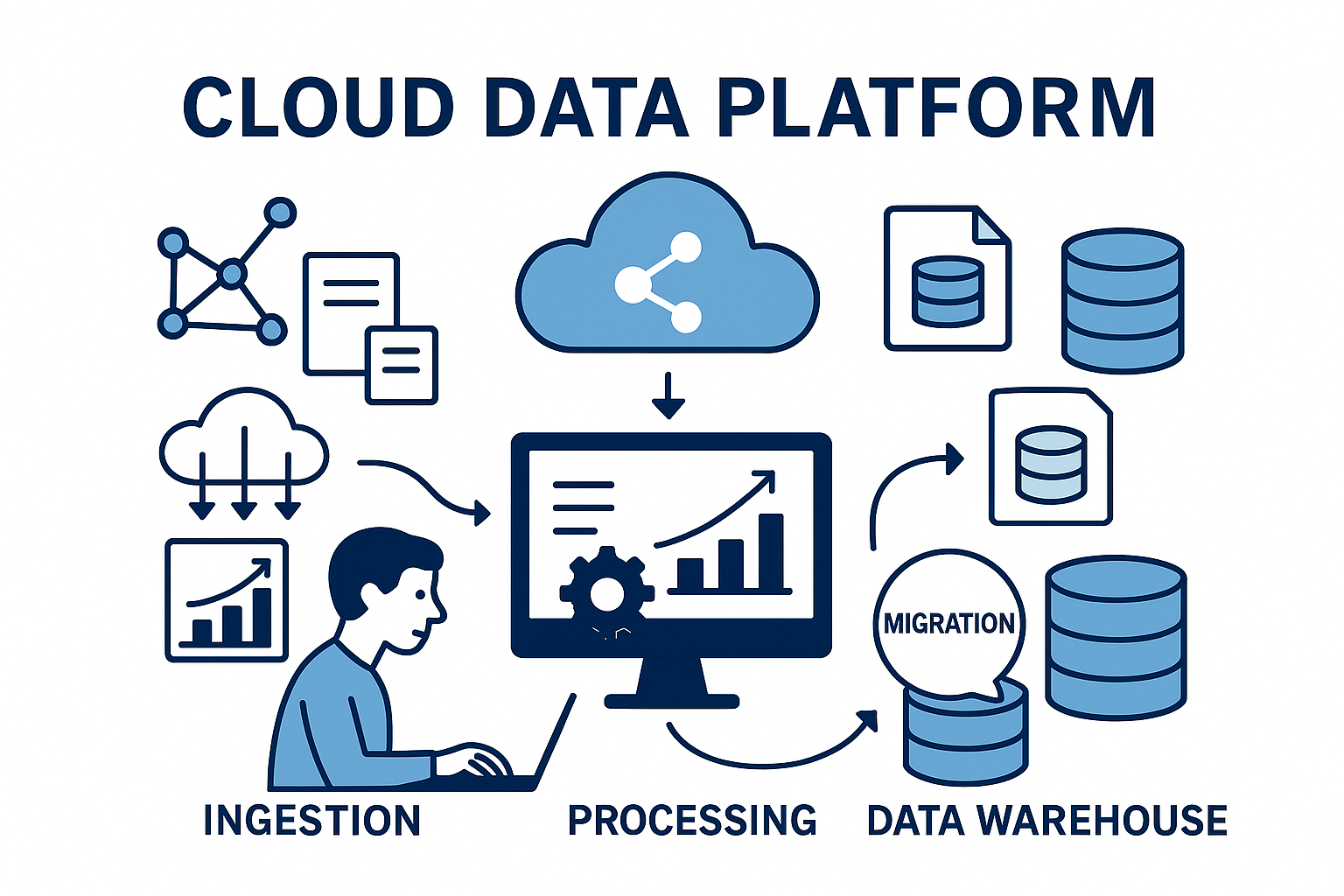
- Intelligent data platforms
The objective is not simply to introduce AI tools. Successful transformation involves redesigning how work gets done so that people and AI systems can work together effectively.
Why AI Is Changing Digital Transformation
Traditional digital transformation often digitised existing processes. For example, a paper-based application might become an online form. AI makes it possible to rethink the process itself.
Instead of simply digitising a customer-service workflow, an organisation might use AI to understand a customer's request, retrieve relevant information, draft a response, identify the appropriate workflow, and escalate complex cases to a human employee. This shift from digitising processes to intelligently redesigning them is one of the defining characteristics of AI transformation.
The Key Benefits
1. Greater Productivity
AI can automate repetitive activities such as summarising documents, classifying information, generating reports, processing routine requests, and assisting with research. This allows employees to spend more time on activities requiring judgment, creativity, communication, and relationship building.
2. Better Decision-Making
Organisations generate enormous quantities of data. AI can help turn that data into usable insights by identifying patterns, detecting anomalies, forecasting demand, and highlighting potential risks. The result can be faster access to relevant information and better-supported decisions.
3. Improved Customer Experiences
AI can personalise interactions and provide assistance across digital channels. Examples include intelligent chat systems, personalised recommendations, automated support, and systems that anticipate customer needs based on previous interactions.
4. New Products and Services
AI does more than improve existing operations. It can enable entirely new business models. Companies can develop AI-powered products, intelligent assistants, predictive services, automated professional tools, and personalised digital experiences that were previously difficult or impossible to deliver at scale.
5. Greater Operational Agility
AI-enabled organisations can analyse changing conditions more quickly and adapt processes accordingly. For example, an organisation might use AI to identify changes in customer demand, supply-chain conditions, market behaviour, or operational performance and respond accordingly.
The Human Side of AI Transformation
Technology alone does not create transformation. Employees need to understand how AI affects their roles and how to use these systems responsibly. This makes training, leadership, communication, and organisational culture just as important as technology.
Rather than viewing AI purely as a replacement for human work, many organisations are exploring human-AI collaboration. In this model, AI handles appropriate analytical or repetitive tasks while people provide context, judgment, creativity, accountability, and interpersonal skills. The most effective approach depends on the nature of the work and the risks involved.
Data Is the Foundation
AI systems depend heavily on data. Poor-quality, fragmented, outdated, or inaccessible data can limit the usefulness of even sophisticated AI systems. Organisations therefore need strong data governance, appropriate security controls, reliable infrastructure, and clear ownership of important information. A successful AI strategy often begins not with selecting an AI model, but with asking:
Do we have the data, processes, technology, and governance required to use AI effectively?
Challenges and Risks
Digital AI transformation also introduces significant challenges.
Organisations need to consider:
- Data privacy: Sensitive information must be handled appropriately.
- Security: AI systems can create new cybersecurity risks.
- Accuracy: AI-generated information can be incorrect or misleading.
- Bias: Systems can reproduce problems present in their training data or processes.
- Governance: Organisations need clear rules for how AI may be used.
- Integration: New AI capabilities must work with existing technology.
- Skills: Employees need appropriate AI and digital capabilities.
- Change management: People need support as responsibilities and workflows evolve.
- Accountability: Organisations must determine who is responsible for AI-assisted decisions.
These challenges mean that responsible AI cannot be treated as an afterthought. It needs to be incorporated into transformation from the beginning.
A Practical Roadmap
Organisations approaching AI transformation can begin with a structured process.
Step 1: Define Business Objectives
Start with business problems rather than technology. Identify where AI could improve customer experience, productivity, revenue, risk management, or operational efficiency.
Step 2: Identify High-Value Use Cases
Not every process requires AI. Prioritise opportunities where AI can create meaningful value and where the risks can be appropriately managed.
Step 3: Assess Data and Technology
Evaluate existing data quality, infrastructure, software systems, security capabilities, and integration requirements.
Step 4: Run Controlled Pilots
Small-scale experiments can help organisations understand what works before committing to large investments.
Step 5: Establish Governance
Define policies covering security, privacy, data usage, human oversight, model evaluation, and accountability.
Step 6: Develop Workforce Capabilities
Employees should receive practical training that helps them understand both the opportunities and limitations of AI.
Step 7: Scale What Works
Once a use case demonstrates measurable value and appropriate controls are in place, it can be integrated into wider business operations.
The Future of Digital AI Transformation
- AI transformation is likely to become increasingly embedded in everyday business technology. Rather than interacting with AI as a separate application, employees may encounter AI capabilities directly within the systems they already use.
- The next phase may involve more autonomous workflows in which AI systems can plan and execute sequences of tasks while remaining subject to appropriate human oversight.
- This creates an important strategic question for organisations: how should work itself be redesigned when intelligent software becomes a permanent part of the workforce?
- Organisations that approach this question thoughtfully can use AI not simply to automate existing processes, but to rethink how products are developed, customers are served, decisions are made, and value is created.
Conclusion
Digital AI transformation represents a fundamental evolution of digital transformation. It combines technology, data, artificial intelligence, people, and organisational change to create new ways of working. The goal is not simply to deploy more AI. It is to use AI where it genuinely improves outcomes while maintaining appropriate human judgment, governance, security, and accountability.
Ultimately, successful AI transformation is as much about people and processes as it is about technology. The organisations that treat AI as a strategic transformation rather than merely another software tool will be better positioned to adapt as the technology continues to evolve.