
Designing Resilient Cloud Systems: Principles and Best Practices for Modern Applications
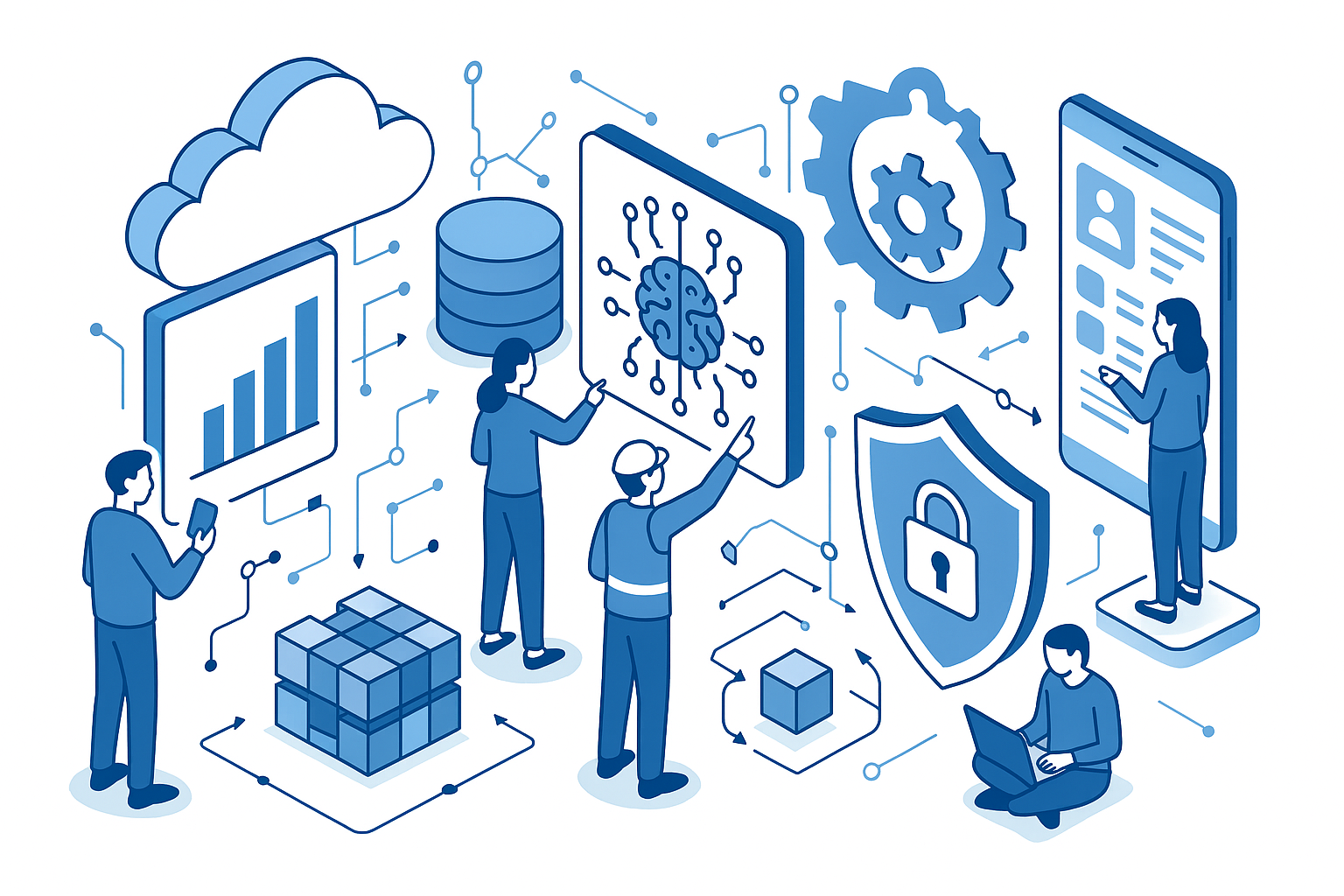
Modern cloud computing has transformed how organizations build, deploy, and scale applications. However, successful cloud adoption requires more than simply moving workloads to the cloud. It demands a design philosophy that embraces flexibility, resilience, automation, and scalability.
The following five cloud design principles form the foundation of reliable and efficient cloud-native systems.
1. Build Loosely Coupled Systems
Loosely coupled systems are designed so that components interact with minimal dependencies on one another. This architecture improves flexibility, maintainability, and fault isolation.
In tightly coupled systems, a failure in one component can cascade across the entire application. In contrast, loosely coupled services can evolve independently and recover from failures more effectively.
Benefits
- Easier maintenance and upgrades
- Improved fault isolation
- Faster development cycles
- Greater scalability
Best Practices
- Use APIs and message queues for communication
- Adopt microservices where appropriate
- Avoid shared databases between unrelated services
- Implement asynchronous workflows
By reducing dependencies between components, organizations can innovate faster while improving overall system resilience.
2. Use Managed Services
Cloud providers offer a wide range of managed services, including databases, messaging systems, monitoring tools, and serverless platforms. Using these services allows teams to focus on business value instead of infrastructure maintenance.
Managed services reduce operational overhead by handling tasks such as patching, backups, scaling, and high availability automatically.
Benefits
- Reduced operational complexity
- Improved reliability and security
- Faster deployment times
- Lower maintenance costs
Examples
- Managed databases
- Object storage services
- Container orchestration platforms
- Serverless compute services
Leveraging managed services accelerates development while enabling organizations to benefit from the expertise and infrastructure investments of cloud providers.
3. Automate Everything
Automation is one of the core advantages of cloud computing. Manual processes are slow, error-prone, and difficult to scale. Automating infrastructure, deployments, testing, and monitoring improves consistency and efficiency.
Infrastructure as Code (IaC) enables teams to provision environments programmatically, ensuring repeatability across development, testing, and production systems.
Areas to Automate
- Infrastructure provisioning
- Application deployments
- Security checks
- Monitoring and alerting
- Backup and recovery processes
Benefits
- Faster delivery cycles
- Reduced human error
- Consistent environments
- Improved operational efficiency
Automation enables organizations to scale operations confidently while maintaining stability and governance.
4. Design for Failure
Failures are inevitable in distributed cloud environments. Hardware issues, network interruptions, software bugs, and service outages can occur at any time. Cloud-native applications must be designed with the expectation that components will fail.
Instead of trying to eliminate failures entirely, resilient systems detect, isolate, and recover from failures automatically.
Key Strategies
- Implement redundancy across regions and zones
- Use health checks and self-healing mechanisms
- Design stateless services where possible
- Apply retry and timeout patterns
- Monitor systems continuously
Benefits
- Higher availability
- Improved customer experience
- Faster recovery from incidents
- Reduced downtime
Organizations that design for failure build systems capable of maintaining service continuity even under unexpected conditions.
5. Scale Horizontally
Horizontal scaling means adding more instances of an application rather than increasing the size of a single server. This approach provides better flexibility, resilience, and scalability in cloud environments.
Traditional vertical scaling has limits and can create single points of failure. Horizontal scaling distributes workloads across multiple systems, improving performance and fault tolerance.
Benefits
- Improved availability
- Better fault tolerance
- Flexible resource allocation
- Cost-efficient scalability
Best Practices
- Design stateless applications
- Use load balancers
- Store session data externally
- Implement auto-scaling policies
Horizontal scaling is essential for handling unpredictable traffic and supporting modern high-demand applications.
6. Security by Design
Security should be integrated into every layer of the architecture rather than added later as an afterthought. Cloud systems must protect data, applications, and infrastructure from evolving threats.
Best Practices
- Apply least-privilege access controls
- Encrypt data in transit and at rest
- Use identity and access management (IAM)
- Automate security scanning and patching
- Implement zero-trust security models
Benefits
- Reduced attack surface
- Improved compliance
- Stronger data protection
- Faster incident response
Embedding security into the design process creates more resilient and trustworthy systems.
7. Observability and Monitoring
Cloud systems are distributed and dynamic, making visibility critical. Observability helps teams understand system behavior through metrics, logs, and traces.
Key Components
- Centralized logging
- Real-time monitoring
- Distributed tracing
- Alerting and incident management
- Performance analytics
Benefits
- Faster troubleshooting
- Improved reliability
- Better operational insights
- Reduced downtime
Strong observability enables proactive issue detection and continuous optimization.
8. Cost Optimisation
Cloud resources are elastic, but unmanaged usage can quickly lead to unnecessary costs. Designing with cost efficiency in mind helps organizations maximize cloud value.
Best Practices
- Use auto-scaling
- Shut down unused resources
- Choose appropriate storage tiers
- Monitor resource utilization
- Use reserved or spot instances where appropriate
Benefits
- Lower operational expenses
- Improved resource efficiency
- Better budgeting and forecasting
Cost-aware architectures balance performance, scalability, and financial efficiency.
9. Infrastructure as Code (IaC)
Infrastructure should be managed programmatically using code and version control systems. IaC enables repeatable, consistent, and automated deployments.
Common Advantages
- Environment consistency
- Faster provisioning
- Easier disaster recovery
- Simplified configuration management
- Improved collaboration
Popular IaC tools allow teams to define infrastructure declaratively and deploy it reliably across environments.
10. Stateless Architecture
Stateless services do not store client session data locally, making them easier to scale and recover.
Benefits
- Easier horizontal scaling
- Improved fault tolerance
- Better load balancing
- Faster recovery after failures
Session information is typically stored in external databases or distributed caches.
11. Data-Driven Architecture
Data is a strategic asset in cloud environments. Systems should be designed to collect, process, and analyze data efficiently.
Best Practices
- Use event-driven pipelines
- Implement data lifecycle management
- Separate transactional and analytical workloads
- Ensure data governance and compliance
Benefits
- Better business insights
- Improved scalability
- Faster analytics processing
Cloud-native data architectures support real-time intelligence and innovation.
12. Continuous Delivery and DevOps
Cloud environments benefit from rapid and reliable software delivery practices. Continuous integration and continuous delivery (CI/CD) pipelines automate testing and deployment.
Benefits
- Faster release cycles
- Reduced deployment risk
- Improved collaboration
- Higher software quality
DevOps culture encourages shared responsibility between development and operations teams.
13. Resilience Through Redundancy
Critical systems should avoid single points of failure by using redundancy across infrastructure components.
Examples
- Multi-region deployments
- Replicated databases
- Backup networking paths
- Redundant load balancers
Benefits
- Higher uptime
- Improved disaster recovery
- Better business continuity
Redundancy strengthens system availability during outages or infrastructure failures.
14. Event-Driven Design
Event-driven systems react to changes or actions in real time through events and messaging systems.
Benefits
- Better scalability
- Loose coupling
- Faster responsiveness
- Efficient resource usage
This approach is commonly used in microservices and serverless architectures.
15. Sustainability and Efficiency
Modern cloud design increasingly considers environmental impact and energy efficiency.
Best Practices
- Optimize resource utilization
- Reduce idle infrastructure
- Use energy-efficient regions
- Implement workload scheduling
Benefits
- Reduced cloud waste
- Lower operational costs
- Improved sustainability goals
Efficient architectures support both business performance and environmental responsibility.
Final Thoughts
Cloud design principles continue to evolve as technology advances. Organizations that embrace security, observability, automation, scalability, resilience, and operational efficiency are better positioned to build reliable and future-ready systems. The strongest cloud architectures combine technical excellence with operational discipline, enabling teams to innovate rapidly while maintaining stability and security.