Data Architecture & Design: The Backbone of Digital Success
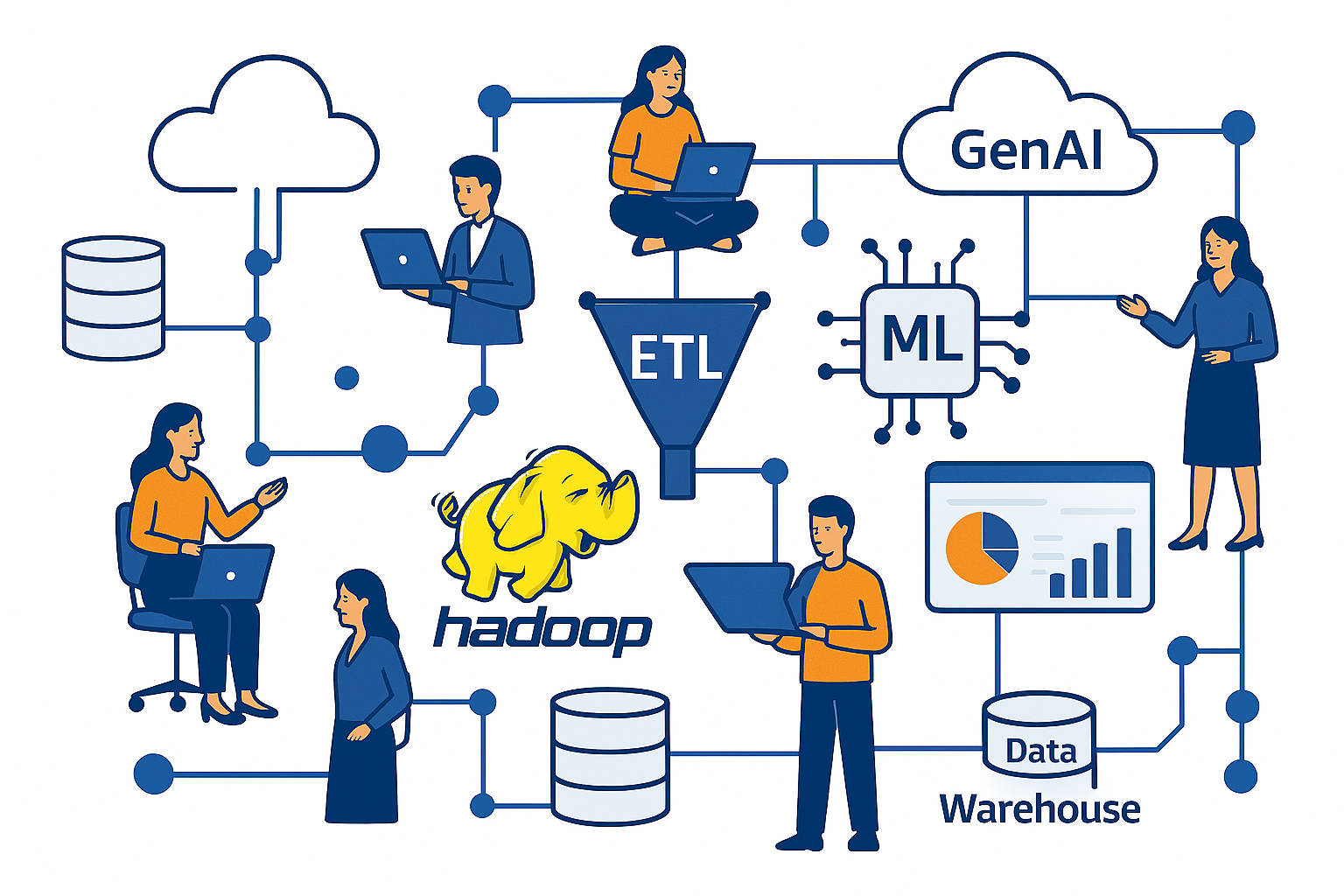
In today’s data-driven world, organisations are generating and consuming more information than ever before. From customer interactions to operational metrics, data fuels decision-making, innovation, and competitive advantage. At the heart of this transformation lies data architecture and design, the structured framework that ensures data is collected, stored, processed, and delivered efficiently and securely. Without a strong foundation, even the most advanced analytics initiatives can falter.
Unified Data Ecosystems
Many organisations are held back by "data silos"—isolated pockets of information in finance, marketing, or operations that don’t communicate. A
unified data architecture breaks these barriers down, integrating disparate sources into a cohesive "single source of truth." Whether using data lakes or hybrid warehouses, this integration ensures that every stakeholder has access to reliable, real-time insights, fostering better collaboration and long-term scalability. A unified data architecture brings together disparate data sources into a cohesive ecosystem. A united approach eliminates fragmentation by integrating these sources into a centralised or well-orchestrated distributed architecture.
This integration enables a single source of truth, improving data consistency and reliability. Whether through data lakes, data warehouses, or hybrid models, a unified architecture ensures that stakeholders across the organisation can access accurate, timely data. The result is better collaboration, more informed decisions, and a clearer strategic direction.
Moreover, unified data architecture supports scalability. As businesses grow, their data infrastructure must evolve without compromising performance. A well-designed architecture accommodates increasing data volumes and complexity while maintaining efficiency.
Move Faster with Agile ETL
The days of rigid, slow-moving Extract, Transform, Load (ETL) processes are over. Agile ETL prioritises modularity and rapid iteration. By utilising automation and orchestration tools, teams can integrate new data sources and deploy updates without disrupting the entire system. This shift from batch processing to real-time capabilities allows businesses to act on insights the moment they emerge.
Extract, Transform, Load (ETL) processes are essential for moving and preparing data for analysis. Traditionally, ETL pipelines were rigid and time-consuming to modify. Today, agility is key.
Agile ETL focuses on flexibility, rapid iteration, and responsiveness to changing business needs. Instead of monolithic workflows, modern ETL pipelines are modular and adaptable. This allows teams to quickly adjust transformations, integrate new data sources, and deploy updates without disrupting existing processes.
Automation and orchestration tools play a crucial role in enabling agile ETL. They allow for continuous integration and delivery of data pipelines, ensuring that data remains fresh and relevant. Additionally, real-time or near-real-time processing capabilities empower organizations to act on insights as they emerge, rather than relying solely on batch processing.
Robust, Automated Data Pipelines
Data pipelines are the lifelines of any data architecture. They handle the flow of data from source systems to storage and analytics platforms. Robust pipelines are designed to be reliable, scalable, and fault-tolerant.
Automation is a critical component of modern data pipelines. Automated workflows reduce manual intervention, minimise errors, and increase efficiency. Features such as monitoring, alerting, and self-healing mechanisms ensure that pipelines can detect and recover from failures.
A strong pipeline design also emphasises data quality. Validation checks, deduplication, and transformation logic help ensure that only clean, accurate data reaches downstream systems. This is essential for maintaining trust in analytics and reporting.
Furthermore, robust pipelines support diverse data types, including structured, semi-structured, and unstructured data. This flexibility allows organisations to harness the full spectrum of their data assets, from transactional databases to streaming data and multimedia content.
Governance and Compliance
As data becomes more central to operations, governance and compliance are no longer optional—they are critical. Data governance establishes policies, standards, and controls to ensure data is managed responsibly and consistently.
Effective governance includes data cataloging, lineage tracking, and access control. These practices help organisations understand where their data comes from, how it is used, and who has access to it. This transparency is vital for both operational efficiency and regulatory compliance.
Compliance requirements, such as data protection laws and industry regulations, demand strict handling of sensitive information. A well-designed data architecture incorporates security measures like encryption, anonymisation, and role-based access control to safeguard data.
Beyond risk mitigation, strong governance enhances data usability. When users trust the data and understand its context, they are more likely to leverage it effectively for decision-making and innovation.
Conclusion
Data architecture and design form the backbone of digital success. By unifying data systems, adopting agile ETL practices, building robust automated pipelines, and enforcing strong governance, organisations can unlock the full potential of their data. In a landscape where data is a strategic asset, investing in a solid architectural foundation is not just a technical necessity. it is a business imperative.